Tibetan Buddhism and Hatha Yoga
An exploration of the shared tantric roots of Tibetan Buddhism and Hatha Yoga, and why both traditions place embodiment at the center of realization.
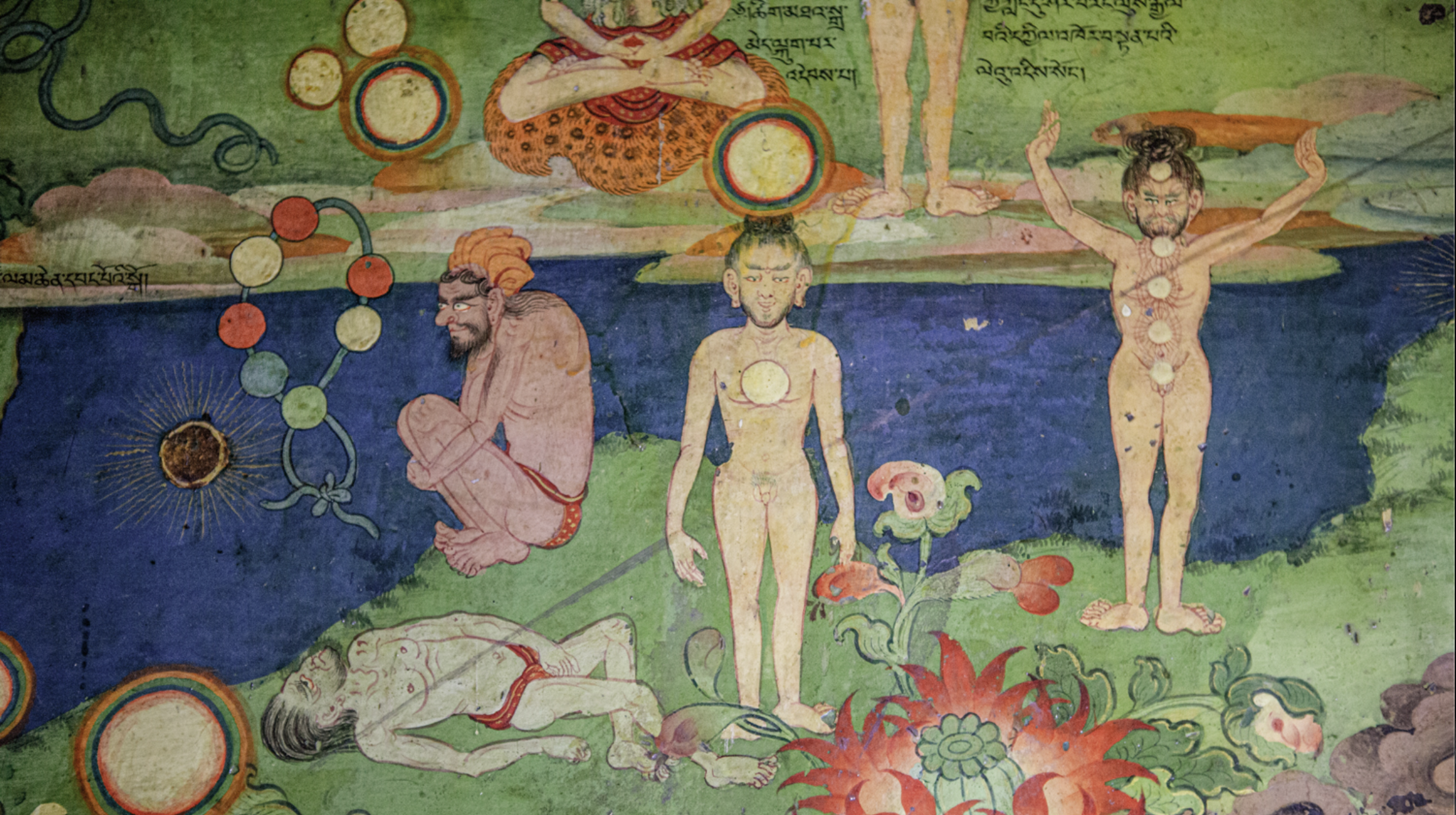
Tibetan Buddhism and Hatha Yoga arose within a shared tantric landscape in medieval India, where distinctions between Buddhist and non-Buddhist yogins were often fluid rather than rigid. Practices concerning breath control, inner heat, retention, and subtle channels circulated across communities of siddhas, many of whom studied and practiced in multiple lineages. The Amṛtasiddhi stands as one of the clearest examples of this shared inheritance, presenting a yogic physiology later adopted, adapted, and reframed by both Buddhist and Śaiva traditions.
In Vajrayana Buddhism, the body is not merely symbolic but functional. Completion-stage yogas depend upon the refinement of winds (rlung), channels (rtsa), and vital essences (thig le). These practices presume a body capable of stability, containment, and responsiveness. Without this, the mind cannot remain steady, and insight becomes intermittent or distorted. Tibetan sources consistently emphasize preparation, ethical grounding, and gradual progression as safeguards.
Hatha Yoga, when understood in its classical sense, fulfills precisely this preparatory function. Through sustained posture, controlled breath, and internal attentiveness, it conditions the body to support contemplative depth. When these streams are reunited with care, the practitioner encounters a coherent path in which embodiment and realization mature together rather than in competition.
Breath, Prana, and Inner Stability
Classical yoga treats breath as the primary bridge between body and mind. This essay explores why pranayama is introduced gradually, how breath stabilizes inner winds and attention, and why restraint rather than intensity creates lasting inner stability.
Why Pranayama Changes Everything
Breath is the most direct bridge between body and mind because it sits at the threshold between what is voluntary and what is involuntary. Classical yoga treats pranayama with unusual respect for this reason. Patanjali defines pranayama as the regulation of the movements of inhalation and exhalation, and he places it explicitly on the basis of steadiness in posture, “tasmin sati,” meaning once that stability has been established. (Swami J) In other words, breath training is not introduced as a casual add on but as a deliberate method of refining attention, perception, and the conditions for meditation.
The later Hatha texts make the same point with even more directness. The Hatha Yoga Pradipika states that after mastering asana, the yogin should practice pranayama as taught by the guru, and it links the steadiness of breath with the steadiness of mind. (Namarupa) This is why traditional instruction emphasizes gradual progression, smoothness, and continuity rather than intensity. A simple truth the body will confirm is that when the exhale becomes quieter and more even, the mind follows. One immediate value add is a self test: sit upright for three minutes, inhale softly through the nose, lengthen the exhale slightly, and notice whether attention becomes less scattered or more agitated. If agitation increases, the practice needs to be gentler and shorter. If calm clarity increases, you are touching the classical function of pranayama.
Tibetan Vajrayana expresses a closely related principle through its own subtle body language of winds and mind. In Tibetan sources and oral explanations, rlung is understood as intimately linked with mind, often summarized as the mind riding the wind like a rider rides a horse. (PMC) This does not mean that awakening is manufactured by breath technique, but that inner stability becomes far more sustainable when the winds are less disturbed. The monthly Amrita Thread training preserves this classical sequencing by teaching breath in stages and integrating it with rest and contemplative reflection, so that prana becomes coherent and the heart and mind become workable. Learn more at www.hathavajrayoga.com.
Compassion as an Embodied Practice
In Vajrayana Buddhism, compassion is cultivated through breath and embodied awareness, not sentiment alone. This essay explores how Hatha Yoga prepares the body to sustain heart-centered practice without exhaustion or collapse.
Why the Heart Needs the Body
In Vajrayana Buddhism, compassion is not only an intention but a felt experience that moves through breath and sensation. Practices like Tong Len engage the entire system.
Hatha Yoga prepares the body to hold this openness without collapse. When posture is stable and breath free, compassion becomes sustainable rather than draining.
This integration of embodiment and compassion is practiced in the monthly Amrita Thread training, where heart-centered practices are supported by regulated breath and posture. Learn more at www.hathavajrayoga.com.
Tibetan Buddhism and the Body
Vajrayana Buddhism understands realization as unfolding through the body, breath, and subtle channels. This essay explores why embodied preparation matters, and how Hatha Yoga functions as a stabilizing foundation for deeper contemplative practice.
Why Vajrayana Is Embodied
Tibetan Buddhism, particularly Vajrayana, places strong emphasis on embodiment as the basis for realization. Completion-stage yogas involving breath, inner heat, and subtle channels are founded on the understanding that awakening unfolds through the body rather than apart from it. These practices assume that awareness is supported by the movement of breath and the stability of the subtle body.
For this reason, preparation is considered essential. Classical Vajrayana sources repeatedly emphasize that without sufficient physical stability, breath sensitivity, and internal balance, advanced yogic methods can become ineffective or destabilizing. The body must be workable before the winds and channels can be refined, and ethical and somatic grounding are treated as prerequisites rather than optional supports.
In this context, Hatha Yoga functions as a stabilizing and preparatory discipline, cultivating posture, breath awareness, and internal steadiness in ways that support Vajrayana-informed meditation. This preparatory relationship is explored practically in the monthly Amrita Thread training, where Hatha Yoga and contemplative practice are integrated with care and responsibility. Further details are available at www.hathavajrayoga.com.

Consciousness and Yoga
Consciousness matures through embodiment, not withdrawal. This essay explores how Hatha Yoga stabilizes the body and breath so that, from a Dzogchen perspective, natural awareness can be recognized clearly and sustained without strain or fabrication.
Why Awareness Needs the Body
Yoga is often misunderstood as mere physical preparation for meditation, yet in its classical forms it is a direct method for stabilizing consciousness through embodiment. Awareness does not mature by withdrawing from sensation, but by learning to remain undistracted within lived experience. The body provides the field in which attention can recognize its own continuity without drifting into abstraction.
Hatha Yoga cultivates this stability through posture, breath, and the gradual refinement of internal sensation. As tension releases and breath settles, awareness naturally becomes less reactive and more spacious. In this way, Hatha Yoga does not manufacture meditative states, but removes the conditions that obscure them, allowing presence to reveal itself through the body.
From the perspective of Dzogchen, awareness is already complete, yet recognition depends on stability. When the body is regulated and the nervous system quiet, recognition of natural awareness becomes sustainable rather than fleeting. This embodied orientation is a central thread of the monthly Amrita Thread training, where Hatha Yoga supports the conditions for clear recognition without reducing awareness to technique. Further details are available at www.hathavajrayoga.com.
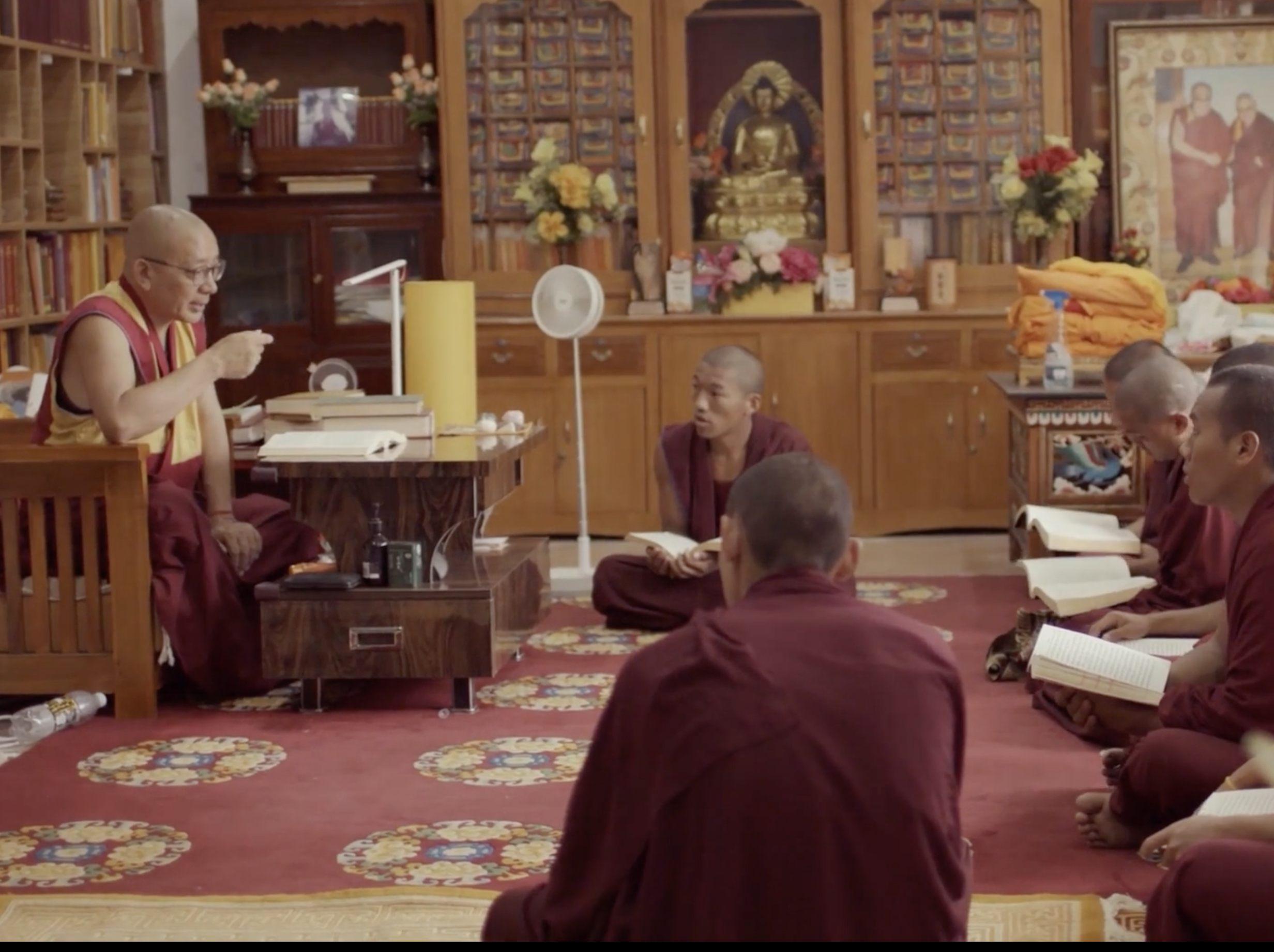
Breath and Mind
Why classical pranayama emphasizes restraint, sequence, and stability rather than intensity.
Breath occupies a unique position in yogic physiology because it mediates between conscious intention and autonomic function. The Yoga Sūtra situates prāṇāyāma after the establishment of steadiness in posture, indicating that breath regulation without bodily stability is premature. This sequencing reflects a deep understanding of how breath influences attention.
Hatha Yoga texts elaborate this principle further, emphasizing that irregular or forceful breathing agitates the mind. The Haṭha Yoga Pradīpikā repeatedly links the steadiness of prāṇa to the steadiness of manas, describing breath as the reins by which the mind is guided. Importantly, restraint rather than intensity is treated as the hallmark of skillful practice.
Vajrayana Buddhism expresses the same principle through the metaphor of mind riding the wind. When winds are disturbed, the mind cannot remain stable. When winds settle, awareness naturally clarifies. Breath practice, approached with humility and patience, becomes a means of creating conditions for insight rather than attempting to manufacture it.
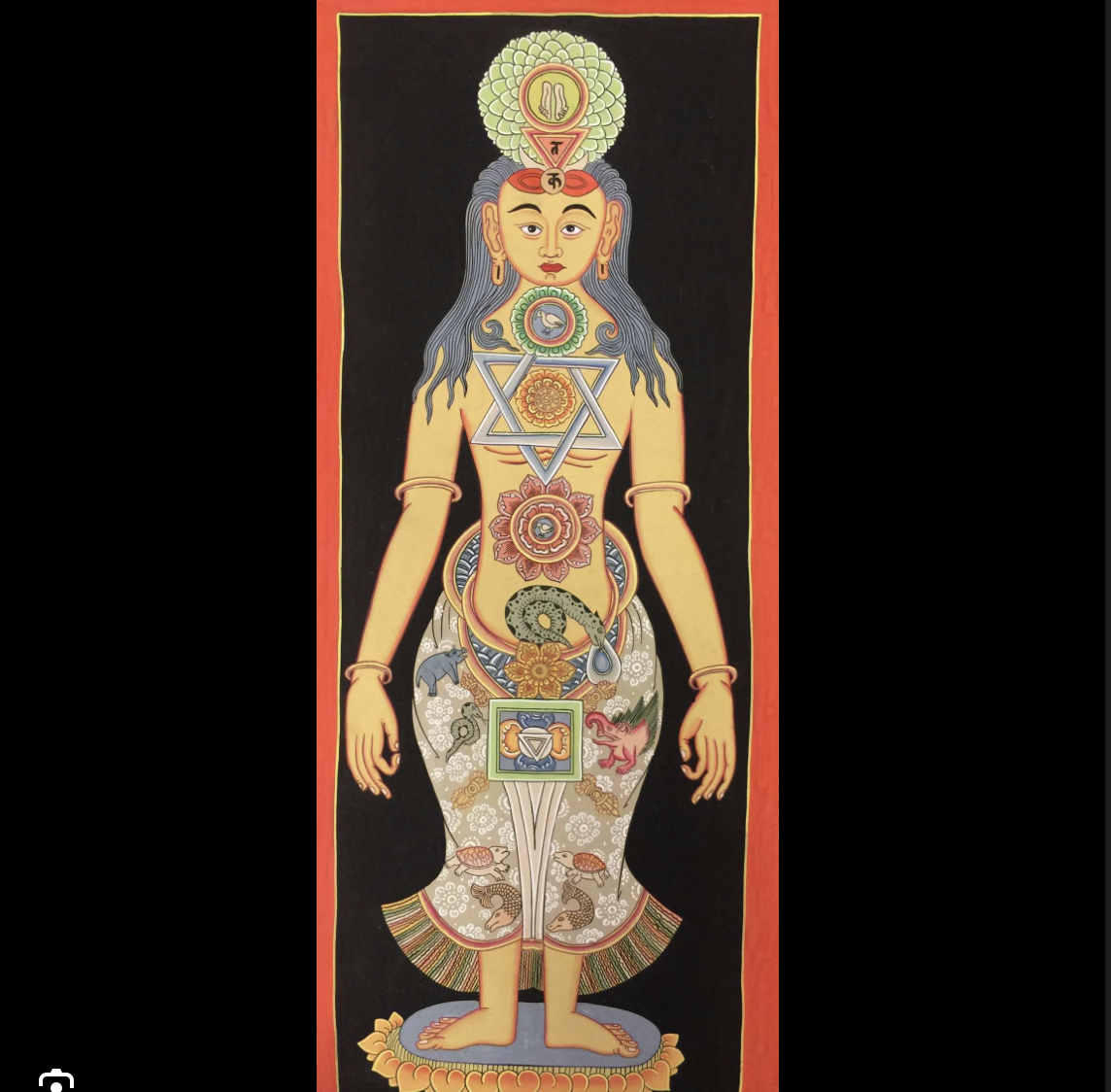
The Central Channel
Classical Hatha Yoga and Gelugpa Vajrayana both describe a central channel revealed through balance rather than force. This essay explores how breath, posture, and restraint allow awareness to stabilize naturally along the body’s midline.
Why Balance Reveals the Axis of Awareness
Across yogic and tantric traditions, descriptions of a central axis arise not as metaphysical speculation but as the result of sustained practice. In the Hatha Yoga Pradīpikā, the suṣumṇā nāḍī is repeatedly identified as the channel through which liberation becomes possible, precisely because it is the pathway where the fluctuations of breath and mind come to rest. The text states unambiguously that when prāṇa enters the suṣumṇā, the mind becomes steady, and when the mind is steady, liberation is possible. This formulation makes clear that the central channel is not an object to visualize arbitrarily, but an experiential condition revealed when breath, posture, and attention are properly aligned.
Hatha Yoga approaches this revelation indirectly. The Pradīpikā emphasizes purification of the nāḍīs through restraint, gradual pranayama, and steadiness in āsana, rather than aggressive manipulation. The reason is explicit: when prāṇa is forced, it scatters; when it is regulated, it gathers. As the inhalation and exhalation become smooth and continuous, prāṇa naturally ceases to move erratically through the lateral channels and begins to stabilize centrally. The practitioner does not push awareness into the suṣumṇā. Instead, conditions are created such that the central channel becomes evident as the axis around which sensation, breath, and attention organize themselves.
Gelugpa Vajrayana expresses an identical principle through its language of rtsa, rlung, and sems. The dbu ma, or central channel, is not emphasized as a symbolic structure but as the site where conceptual mind quiets when the winds dissolve. Classical Gelugpa explanations consistently state that mind rides on wind, and that when winds enter, abide, and dissolve within the central channel, coarse conceptuality subsides. Importantly, this process is not described as something imposed through imagination alone. Completion-stage instructions emphasize that recognition becomes stable only when the winds are workable and the body sufficiently prepared.
What unites these systems is their insistence on balance rather than force. In both Hatha Yoga and Gelugpa Vajrayana, the central channel becomes apparent not through effortful concentration but through the resolution of imbalance. As posture becomes upright without rigidity, as breath becomes quiet without suppression, and as attention rests without grasping, awareness naturally gathers along the body’s midline. This gathering is not a trance state or altered condition but a simplification of experience. Sensation becomes unified, mental discursiveness diminishes, and awareness gains a stable reference point without narrowing.
Crucially, neither system treats the central channel as an end in itself. In the Hatha Yoga Pradīpikā, the stabilization of prāṇa in the suṣumṇā is valuable because it supports absorption and clarity, not because it produces sensation. In Gelugpa Vajrayana, the dissolution of winds into the central channel is meaningful because it allows the practitioner to recognize the nature of mind without interruption. In both cases, the axis serves realization by removing interference rather than generating experience.
When approached responsibly, the central channel reveals something fundamental about embodied awareness: that clarity arises when excess movement resolves. The body does not need to be transcended, nor does awareness need to be manufactured. Under conditions of balance, awareness naturally finds its center.This classical understanding of the central channel as something revealed through balance rather than forced is explored experientially in the Amrita Thread monthly training. In this setting, Hatha Yoga is used to cultivate posture, breath continuity, and internal steadiness, while Vajrayana-informed contemplative methods support the stabilization of awareness without fabrication. The emphasis remains on sequence, restraint, and direct experience, allowing practitioners to engage these principles responsibly within a living practice context. Further details are available at www.hathavajrayoga.com.
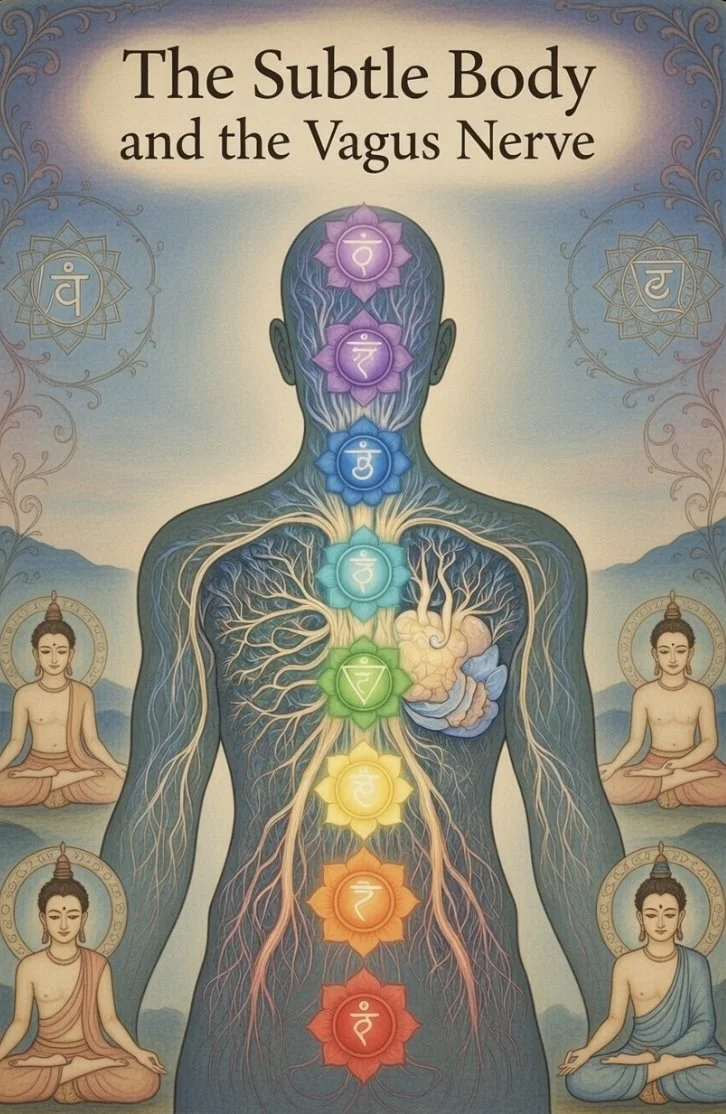
The Subtle Body and the Vagus Nerve
Modern neuroscience describes the vagus nerve as central to calm, emotional regulation, and social connection. Long before this language existed, yogic systems developed methods to influence the same functions through breath, posture, and deep relaxation. The subtle body is the experiential map through which this regulation is felt.
Slow breathing, supported inversions, and extended stillness naturally stimulate parasympathetic response. Practitioners experience this as warmth, spaciousness, or quiet alertness rather than sedation. When the nervous system settles, attention stabilizes without force, and insight becomes accessible.
This regulation is not treated as an add-on, but as a foundation in the monthly Amrita Thread training, where breath, rest, and subtle body awareness are integrated carefully over time. This approach is detailed further at www.hathavajrayoga.com.
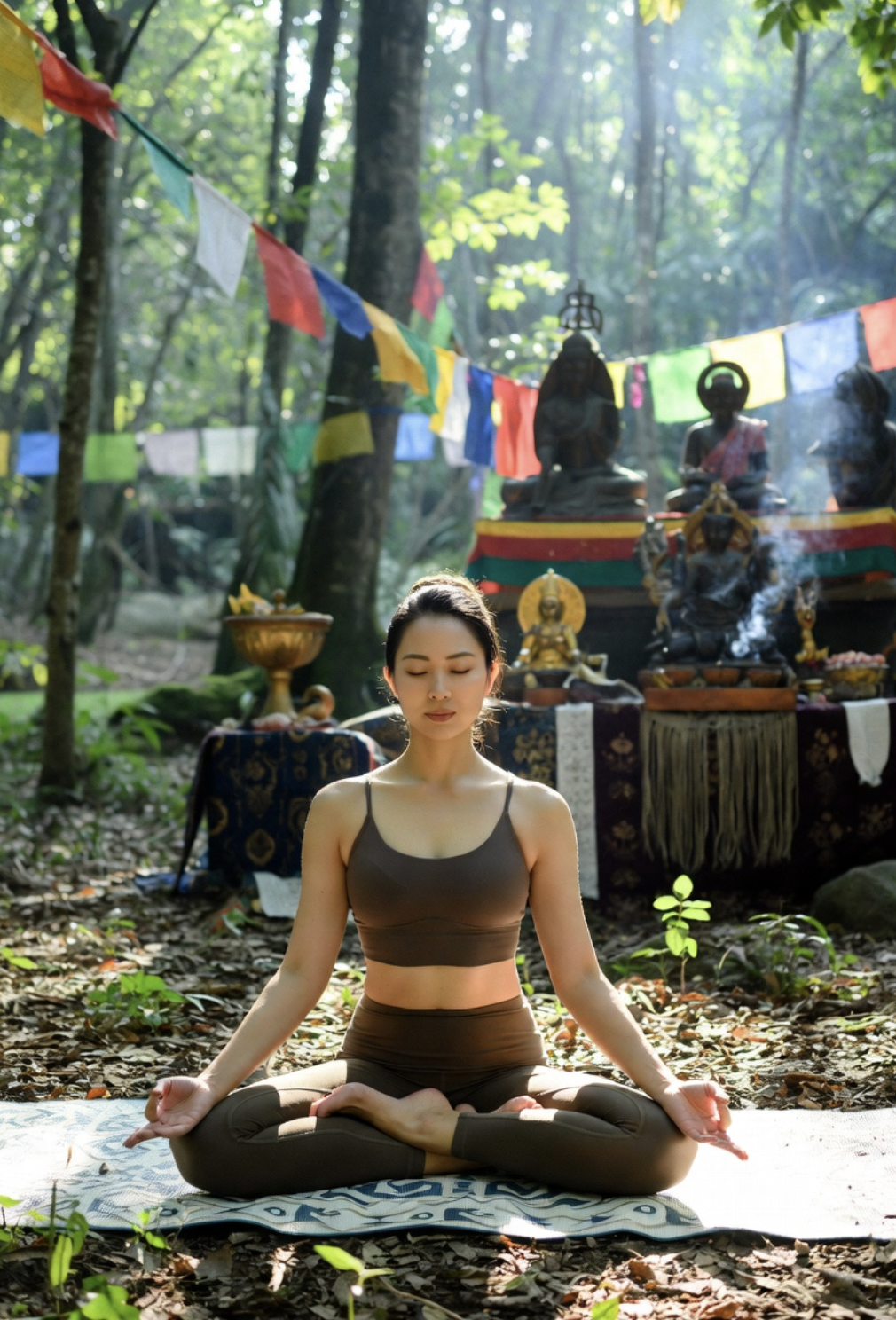
Tibetan Buddhism and Hatha Yoga
Why These Traditions Were Never Meant to Be Separate
Tibetan Buddhism and Hatha Yoga are often presented as distinct paths, yet historically they arose within overlapping tantric cultures that shared methods for working with breath, inner heat, and the subtle body. In both traditions, awakening was not imagined as an escape from the body, but as something cultivated through it. Posture, breath, and internal circulation were treated as necessary conditions for stable insight and compassion.
A truth many practitioners discover over time is that meditation becomes unstable when the body remains unprepared. Hatha Yoga addresses this by reorganizing tension patterns and teaching the nervous system how to settle, while Vajrayana Buddhism gives that settled awareness ethical direction through compassion and clarity. When these streams are separated, practice fragments. When reunited, the body and mind begin to cooperate.
This integrated approach is practiced as a living method in the monthly Amrita Thread training, where Hatha Yoga and Vajrayana-informed contemplation are taught as one continuous discipline rather than parallel practices. More information on this ongoing training can be found at www.hathavajrayoga.com.

Breath, the Nervous System, and the Real Work of Hatha Yoga
Most people are managing symptoms, not healing. The breath is the first place that changes. In this post, I lay out how real breathwork reorganizes the nervous system, steadies the mind, and becomes the foundation for deeper clarity and intuitive capacity. This is the first step in all the work I teach, including Clear Light Intuition.
If you’re not breathing properly, you’re not healing. You’re just managing.
The nervous system doesn’t respond to thought. It responds to rhythm. And breath is the first rhythm your body ever knew. Long before you had language or memory, your breath was telling your system whether the world was safe or threatening. That early imprint became the background tone for how your body reacts to life.
Hatha Yoga, when taught properly, isn’t about flexibility. It’s about regulation. It’s about clearing the static that keeps you disconnected from the deeper parts of yourself.
When most people show up to practice, they don’t realize how tight their breath is, how shallow their inhale, or how frozen their belly has become. This isn’t a minor detail. It’s a sign that the nervous system is stuck in defense. When that’s the case, the body can’t open, the mind can’t focus, and the energy remains scattered.
That’s why in real Hatha Yoga, breath is the method. You align the body so breath can move. You use the breath to regulate the system. Then, once the system settles, the mind becomes clear. That’s the sequence. If you skip it, you’re just going through the motions.
The Hatha Yoga Pradipika says it directly. When prana moves, the mind moves. When prana becomes still, the mind becomes still. That’s not poetry. It’s a roadmap.
When your breath deepens, something begins to shift. The body softens. The system starts to trust again. The vagus nerve activates. The fight or flight response takes a step back. Not because you forced it, but because breath sent a new signal. That signal says, I am here. I am safe. I am steady.
This is where the real healing begins. Not in theory, but in sensation. You begin to feel again. You start to notice how breath enters the heart. How the belly opens. How the spine starts to feel like a current instead of a burden.
And as that space opens, you gain access to something deeper.
This is exactly why I begin my Psychic Development work with breath. If your nervous system is braced, if your breath is shallow, you can’t access subtle perception. You can’t read energy or vision clearly when your internal field is scrambled. The breath clears the field. It sets the tone. It builds the capacity for intuitive clarity.
In the ten-session private mentorship I teach, Clear Light Intuition, breath is the first gate. Not because it’s basic, but because it’s essential. From there, we move into energetic alignment, karmic clarity, vision refinement, and finally, intuitive mastery. But it begins with breath. It begins with learning to listen to your own system with precision and depth.
If you’re curious, you can learn more here:
Clear Light Intuition: A Lineage-Based System for Psychic Growth
This work is not about becoming mystical. It’s about becoming accurate. Your intuition isn’t something you have to find. It’s already there. But it speaks quietly. And if the nervous system is in chaos, you’ll miss it every time.
Breath is how you learn to listen again.
This is what yoga was designed to teach. Not escape, not performance. But the ability to come home to your own body, regulate your energy, and rest in the kind of presence that doesn’t shake when the world moves.
You want clarity. You want calm. You want to know what’s true. Start by breathing like you mean it. Let that breath open your body, organize your mind, and steady your heart.
Everything else flows from there.

How Hatha Yoga Heals Trauma through Breath, Ethics, and the Awakening of Inner Power
Ancient yogic science meets modern trauma recovery. Learn how breath, bandhas, postures, and the ethics of Hatha Yoga awaken the body’s innate power to heal from deep psychological wounds.
Trauma lives in the tissues. It leaves imprints not only on the mind but in the breath, the spine, the musculature, and the nervous system. The yogic tradition—especially the ancient path of Hatha Yoga—offers something far more powerful than temporary relief. It offers the possibility of transmutation.
Where modern science speaks of the dysregulated nervous system, yogic texts speak of disturbed prana. Where psychology speaks of emotional triggers, the Hatha Yogin sees energetic knots, or granthis, blocking the central channel. And where trauma therapy often stops at managing symptoms, Hatha Yoga goes deeper. It aims for liberation.
In the Hatha Yoga Pradipika, the yogi is told, “When the breath is unsteady, the mind is unsteady. When the breath is steady, the mind is steady, and the yogi becomes firm.” This is not metaphor. It is instruction.
The first healing begins in the breath. Trauma fractures the breath. It becomes shallow, arrhythmic, locked high in the chest. Through practices like nadi shodhana, kapalabhati, and bhramari, the Hatha Yogi begins to reclaim what has been lost—stability, rhythm, and inner warmth. These breath practices do more than regulate the vagus nerve. They awaken the dormant intelligence of the subtle body, reconnecting the practitioner to an inner voice that trauma may have silenced.
Hatha Yoga is not merely physical. It is an ethical and spiritual technology. In texts like the Gheranda Samhita and the Shiva Samhita, the purpose of postures is not flexibility. It is stillness. It is vitality. It is the preparation of the body so that it becomes a vessel for higher awareness. The spine becomes a pillar of light. The breath becomes a current of intelligence. The mind becomes clear and responsive, no longer hijacked by memory or fear.
Ethics are foundational. The yamas and niyamas are not moral suggestions. They are prerequisites. In particular, ahimsa—nonviolence—is a commitment not only toward others, but toward oneself. This is essential in trauma recovery. Many who carry trauma live with inner aggression, self-blame, and hypervigilance. The ethical framework of yoga creates inner safety, a place where healing can take root.
Modern trauma experts, like Dr. Stephen Porges, point to safety and co-regulation as key factors in healing. The Polyvagal Theory identifies the vagus nerve as a core regulator of emotional well-being. What Hatha Yogis have known for centuries is that specific breath patterns, bandhas, and postures directly influence this nerve. Through uddiyana bandha, the diaphragm becomes supple. Through mula bandha, the root is reclaimed. Through jalandhara bandha, the mental field is cooled and balanced.
But Hatha Yoga offers more than neuroregulation. It offers awakening.
The true map of Hatha Yoga points inward, toward the sushumna nadi—the central channel of awareness that runs through the spine. Trauma causes prana to scatter, often into the ida and pingala channels—left and right, past and future, memory and projection. Hatha Yoga gradually redirects that energy inward, into the vertical axis of the self. This is where deep healing begins.
The practices of asana, pranayama, mudra, and bandha are designed to clear the central axis. As this happens, old emotions begin to rise. Stored grief, rage, fear—they surface not as problems but as opportunities. The body becomes a sacred fire where these energies are seen, breathed, and released. What once bound us becomes fuel for awakening.
In the yogic view, trauma is not a pathology. It is frozen energy. When met with breath, awareness, and stillness, that energy melts. The yogi who persists finds not only release from suffering, but the emergence of something greater—ojas, the refined essence of vitality. This is not just strength. It is presence. It is the radiance of one who has walked through the fire and emerged whole.
The journey is not linear. The yogic path requires patience, devotion, and integrity. But it works. Time and time again, those who commit to the breath, to the body, and to the inner discipline of Hatha Yoga report the same thing—the pain no longer defines them. The past no longer haunts them. The self becomes quiet, strong, and radiant.
In the ClearLight Intuition course, we begin here. We use breath to soften the ground. We use postures to reclaim safety. We use silence to listen inward. From there, a deeper transformation begins. Students do not just feel better. They remember who they are.
Hatha Yoga is not a workout. It is a return. A return to the center, to the spine, to the breath, and to the unwavering stillness that was never broken, only forgotten.
And from that stillness, life begins again.

How Buddhist Practices of Mindfulness, Ethics, and Interdependence Heal Trauma
Are you ready to cut through the heavy narratives and stories you’ve been carrying?
Trauma is not your identity. It is a karmic echo, or a reified pattern, not a life sentence. Through the Buddhist science of mind and the yogic path, we don’t escape trauma. We work through its variety of expressions and with practice and compassion we outgrow it.
In the modern world, trauma is often discussed as a condition of the nervous system, a residue of unprocessed experiences trapped in the body. But within the Tibetan Buddhist tradition, trauma is something even more nuanced. It is a disruption of clarity, an obscuration of consciousness, a distortion of perception that interferes with our natural state of knowing and being. This natural state, known in the highest teachings as rigpa or the clear light of awareness, is not something manufactured or created. It is something to be revealed by continuously developing attention, relaxing, and stabilizing clarity.
The path back to this natural state especially for those carrying the weight of trauma requires stability, insight, and above all, ethical integrity. These elements are not abstract ideals. They are technologies of the mind, cultivated through centuries of contemplative science, and their healing power is not merely spiritual but profoundly psychological.
Je Tsongkhapa, the great Tibetan master and founder of the Gelug tradition, wrote in his Lamrim Chenmo that “ethics is the foundation for all higher realizations.” Without a base of ethical conduct, the mind remains agitated, pulled by regret, shame, or confusion. But when ethical conduct is firm, the mind settles. It becomes a suitable vessel for mindfulness and insight to take root.
Trauma fragments awareness. It creates loops of reactivity, often unconscious, that override reason and presence. From a Buddhist perspective, this fragmentation is a karmic echo, a result of causes and conditions that have ripened into suffering. But karma is not destiny. It is pliable. It changes when causes are changed.
The first step is mindfulness. Not the sanitized, commodified version found in wellness apps, but dranpa—mindful recollection of what one is doing, feeling, and thinking in the present moment. In Buddhist training, mindfulness is cultivated not just to reduce stress, but to hold attention steady, so that insight can be applied. It is the guardian of the mind, as Tsongkhapa taught, protecting it from distraction and degeneration.
In the Foundational Stages of the Path, Tsongkhapa writes of the necessity of mindfulness as a precondition for concentration and inner transformation. He does not treat it lightly. In trauma recovery, this function of mindfulness is essential. Without it, the practitioner is swept away by the tides of memory and emotion. With it, space opens between stimulus and response. A person no longer reacts—they choose.
Ethical conduct, or śīla, provides the structure within which mindfulness can flourish. In trauma work, this means making commitments to non-harming, to truthfulness, to sobriety of action and speech. When trauma distorts the mind, it also distorts moral clarity. Through ethics, we rebuild integrity—not just with others, but within ourselves.
Modern neuroscience echoes this principle. Dr. Bessel van der Kolk, a pioneering trauma researcher, writes in The Body Keeps the Score, “Being able to feel safe with other people is probably the single most important aspect of mental health.” Ethics create that safety. They create trust. And trust is the soil in which healing grows.
Stabilizing consciousness through meditation allows one to see the architecture of trauma—how it is held not just in thought but in sensation, energy, and expectation. Concentration, or samādhi, cultivated through practices like shamatha, builds the strength needed to stay present in the face of discomfort. Trauma breaks time. It traps people in the past. Concentration reclaims the present.
But the final medicine is insight—vipashyana—into the nature of interdependence. Trauma convinces us that we are alone, that our suffering is unique, that our identity is fixed by what was done to us or what we failed to do. Buddhist insight dismantles this narrative.
Je Tsongkhapa’s writings on dependent origination (pratītyasamutpāda) are among the most precise and luminous commentaries on interdependence in any tradition. He wrote, “If one sees dependent arising, one sees the Dharma. If one sees the Dharma, one sees the Buddha.”
When one truly sees interdependence, trauma is no longer held as an isolated wound. It is seen as a web of conditions, none of which are permanent, none of which define the whole. The self is not annihilated, but deconstructed and re-understood. One sees the ways memory, identity, pain, and hope interlock—and in seeing this, freedom arises.
The ClearLight Intuition course is built on this exact structure. First, we stabilize the breath. Then, we stabilize attention. Then, we explore the inner body, where trauma is held in tension and habit. We introduce ethical alignment, not as rules, but as anchors. Then we begin to unravel the identity forged in pain and move toward a consciousness that is luminous, ethical, and free.
This is not a spiritual bypass. It is the deepest kind of reclamation.
A practitioner who reclaims their body, their ethics, and their clarity reclaims their life. Trauma may have altered the terrain, but the path through it is ancient and precise. Through the Tibetan Buddhist sciences of mind and the practices of yogic stabilization, we do not escape trauma. We outgrow it. We see it clearly. We meet it with the full force of wisdom and compassion.
And eventually, we dissolve it into the vast, unshakable clarity of the mind’s true nature. That nature is not broken. It never was. It was simply waiting to be revealed.
🕯️

Healing Trauma and the True Purpose of Yoga
Real yoga begins when you stop performing and start listening. Hatha Yoga was never about stretching. It’s about rewiring the breath, restoring the subtle body, and meeting the places where trauma lives. You don’t heal by avoiding discomfort. You heal by moving toward what pain tried to shut down.
Most people think yoga is about flexibility. Some believe it’s about stress relief. But real yoga begins when you confront what’s been buried. Not perform it. Not escape it. Face it. And breathe into it until it lets go.
In the Hatha Yoga tradition, healing isn’t accidental. It’s the result of method. The Gheranda Samhita calls yoga “the path of purification.” Not purification through rituals. Purification through the restructuring of prana, the energy behind every thought, every emotion, every wound.
Trauma lives in the nervous system. But deeper than that, it lives in the subtle body. You can talk about your childhood for ten years, and the pain might still be there. Because until the energy is moved, the story remains active.
The yogis knew this. That’s why they trained the breath. That’s why they worked with bandha and mudra. These were not spiritual theatrics. They were tools to redirect the energy patterns that keep trauma stuck in the body.
The Hatha Yoga Pradipika says:
“Where there is breath, there is mind. Where there is no breath, there is no mind.”
And where there is no breath, trauma hides. It cuts the breath. It locks the diaphragm. It freezes the body. And the mind keeps looping through past pain without resolution.
What I teach is not yoga for performance. It’s yoga as energetic restoration. You work with the body not to master it, but to reveal it. You breathe not to feel calm, but to locate where you stopped breathing years ago and begin again.
Bandha is not just a physical lock. It’s a seal to direct prana where it needs to go. To break open what’s been shut. When taught correctly, these practices bring up what you’ve suppressed. Emotion rises. Tension releases. Sometimes tears come. Sometimes stillness does.
This is the real work. Not yoga to forget, but yoga to remember. Not to bypass, but to pass through.
The Shiva Samhita teaches:
“When the nadis are purified, the mind becomes calm, and the breath flows freely.”
That’s the goal. Clear channels. Steady breath. A mind that doesn’t react the way it used to. A nervous system that doesn’t brace. A body that stops armoring against the past.
You don’t heal by talking about trauma forever. You heal by inhabiting the places that trauma made you leave. Slowly. With breath. With precision. With patience. And with the fire of practice behind you.
If you want real transformation, don’t chase comfort. Chase truth. Yoga will give you that. But only if you stop treating it like exercise and start treating it like a path.

The Breath Knows: Healing the Nervous System and Balancing the Mind Through Prana
The nervous system doesn’t heal through thought. It heals through breath. In this post, I break down how real breathwork quiets the mind, regulates the body, and creates the foundation for intuitive clarity. If you’re working with me through Clear Light Intuition, this is where the path begins.
Breath is the first to arrive and the last to leave. In between, it holds every experience you’ve ever had.
If the nervous system is the instrument, the breath is the tuning fork. It gives you real-time access to your state, your patterns, and your potential. When you learn how to work with it properly, the breath becomes more than a tool. It becomes a teacher. It shows you where you’re holding, where your energy is scattered, and where your mind is out of alignment.
Most people don’t breathe. They inhale and exhale, but they’re disconnected from the intelligence of breath. They don’t realize that every shallow breath tells the nervous system to brace, to prepare for threat. Over time, this becomes the default state—fight, flight, freeze, or perform.
You can’t think your way out of that. But you can breathe your way through it.
In Hatha Yoga, breath is not casual. It’s central. The Hatha Yoga Pradipika teaches that prana and mind move together. When prana is still, the mind is still. When the winds calm, the mind returns to its natural clarity.
The nervous system follows breath. The mind follows the nervous system. So if you want a clear mind, a regulated body, and a grounded presence, you start with the breath.
But it’s not just about lengthening your inhale or counting to four. Real breathwork means learning how to direct prana, not just air,into specific spaces in the body and subtle body. You learn to clear blocks. You learn to activate your field. You learn to listen.
This is the foundation of the Psychic Development work I teach.
You can’t access intuitive clarity if your breath is shallow. You can’t tune into subtle perception if your nervous system is on edge. That’s why the first phase of the work is about reclaiming the breath not as a technique, but as a relationship.
Once the breath becomes stable, something opens. People begin to feel again. They begin to trust what they sense. The mind quiets because it no longer has to protect the system. Presence returns. Energy begins to flow in a unified way.
And that’s when the deeper intuitive capacity begins to show itself.
In the Clear Light Intuition training, we work directly with breath and prana to regulate the system, clear out energetic noise, and build a strong inner channel. The goal isn’t to float away. It’s to stand clearly in your body and know what’s true.
Every insight you’re looking for is already there. The breath is the bridge.
If you’re ready to begin working with your breath not just for stress relief, but for energetic coherence and intuitive awakening, this is the entry point.
You can learn more about the 10-session mentorship here:
Clear Light Intuition: A Lineage-Based System for Psychic Growth
Your nervous system isn’t broken. It’s just waiting to be met with consistency, clarity, and breath.
And when you meet it that way, it opens.
Every time.

Insight as Medicine How Vipashyana Reveals the Interdependent Nature of Trauma
You don’t heal trauma by talking about it forever. You heal it by seeing clearly how it arises — through interdependence. Vipashyana isn’t philosophy. It’s the act of cutting through illusion, so what once ruled you begins to release its hold.
Insight is a shift in perception that eventually rearranges your nervous system. It isn’t intellectual. When one has even a temporary glimpse into the interdependent nature of mind, the trauma you’ve carried a process of to dissolving. Not because you’ve escaped it, but because you’ve stopped misperceiving it
In the Gelugpa system, vipashyana is not optional. It is the method that transforms your view from fixation to freedom. Je Tsongkhapa made this clear in The Great Treatise on the Stages of the Path:
“Without insight into emptiness, liberation is impossible. Without stability of mind, insight will never arise.”
The West has commodified mindfulness but bypassed insight. Mindfulness alone doesn’t liberate. It prepares the ground. Vipashyana, or special insight, is the blade that cuts. It is the act of looking at your thoughts, your self, your pain, and seeing that none of it exists the way you think it does.
This is not spiritual bypassing. It’s spiritual precision.
The Buddha’s central teaching on interdependence, pratītyasamutpāda, is not just about external events. It is the architecture of experience. Your trauma is not static. It exists because certain conditions support it: memory, belief, identification, body tension, breath pattern. Change those conditions, and the trauma begins to lose its foundation.
What causes trauma to persist is the belief that “this happened to me” exists as an absolute truth. That the emotion is solid. That the past is fixed. But vipashyana teaches you to look at that emotion, that story, that pain, and ask what is it dependent upon?
Every emotion is dependent on attention. Every perception is dependent on a concept. Every wound is dependent on a frame of identity. See through the chain, and the lock breaks open.
In the Mūlamadhyamakakārikā, Nagarjuna says:
“There is no phenomenon that is not dependently arisen. Therefore, there is no phenomenon that is not empty.”
This is not philosophy. It is direct medicine. When you see your trauma as a co-arising event, not a fixed self-contained entity, the nervous system softens. The breath deepens. And you are no longer at war with what you once called “your story.”
What I teach in practice is to prepare the ground through shamatha, stabilize the breath and nervous system, and then apply insight, looking directly at the pain and investigating its substance. Not to escape it, but to recognize its fluidity.
No trauma exists on its own. It requires conditions to remain active. When you see those conditions clearly, the mind starts letting go. Not as a choice. But as a natural result of insight.
This is why the classical texts describe insight as a fire. It burns away delusion. And when the illusion of permanence and solidity is burned, what remains is space. Space is not numbness. It’s the ground where clarity and compassion can grow.
Real healing begins when we stop trying to manage our story and start understanding it as a projection built on interdependence. You don’t have to believe this. You have to look.

Somatic Healing Through the Practice of Yoga
Most people live outside of themselves, disconnected from their body’s truth. Somatic healing through Hatha Yoga is the process of returning—breath by breath—into the nervous system and the subtle body, where real clarity begins. This isn’t about fixing anything. It’s about making contact with what’s already there.
Most people live slightly outside of themselves. They’re thinking through the day, reacting to the world, and doing everything they can to keep up. But few are actually in their body. Fewer still are listening to it.
Somatic healing begins when you stop using your body like a machine and start honoring it as a field of intelligence. The nervous system isn’t just functional. It’s expressive. It tells the truth, even when the mind is telling stories. That truth lives in sensation. In tightness. In breath. In energy.
Through consistent yoga practice, especially classical Hatha Yoga, you begin to retrain your awareness. Postures become less about shape and more about contact. You begin to notice where you’re holding, where you’re bracing, where you’ve gone numb. You start to listen. Not with your thoughts, but with your breath. With your presence. With your body.
The body stores memory. Not just personal memory but generational memory. Emotional memory. Energetic history. It’s not just in your head. It’s in your spine. In your gut. In the subtle tissues that contract every time you override what you’re really feeling.
Hatha Yoga gives you a way back. Asana softens the outer layers. The breath leads you into the nervous system. And if you’re steady, if you stay with it, the system begins to trust again. You begin to settle. Not because life is easy, but because you’re no longer running.
The Hatha Yoga Pradipika says it clearly. When the nadis are purified, the breath flows freely, and the mind becomes calm. Then begins the real yoga.
That calm doesn’t come from escaping. It comes from staying. From not flinching when discomfort rises. From letting the body release what it’s been holding for years.
The mind follows the breath. The breath follows the body. When all three align—awareness, breath, and physical sensation—your energy starts moving differently. You’re no longer fragmented. You’re whole. And when you’re whole, clarity becomes natural.
This is not about fixing yourself. This is about meeting yourself fully. It’s about building enough inner space that you can feel what’s real without being swallowed by it.
Je Tsongkhapa wrote, If the mind is not resting in the body, the practice is hollow. But when grounded in the body, it becomes a vessel for insight.
That’s what we’re after. A body that can hold intensity. A breath that can carry you through it. And a mind that’s clear because it no longer has to defend against feeling.
Somatic healing is not about concepts. It’s about contact.
Contact with breath.
Contact with sensation.
Contact with presence.
From that contact, clarity rises. You don’t force it. You create the space for it to show itself. And it always does.
This is the work. Not to escape the body. But to return to it. And in that return, you remember who you are.

Somatic Healing and the Journey Through the Body
Real healing doesn’t happen in the mind. It happens in the body through presence, breath, and direct experience. What most people call yoga is often just physical exercise. But real yoga, the kind passed down through the classical Hatha Yoga tradition, was never about performance. It was a system designed to guide you through the physical body, into the nervous system, and ultimately into the subtle body.
This progression is what creates genuine somatic healing. Not temporary relief. Not a moment of peace. But a deep restructuring of how energy flows through you, how emotion is stored, and how your mind relates to your body.
When practiced properly, Hatha Yoga creates a natural sequence of awakening. First, it opens the physical body. Then it regulates the nervous system. Then, when the winds have quieted, it introduces you to the subtle field, the energetic dimension that most people never touch.
We begin with the physical body. Through asana and breath, the muscular armor starts to loosen. The breath gets deeper. The joints begin to feel spacious. But what’s actually happening is deeper than flexibility. You’re removing physical tension that is directly tied to emotional memory. The Hatha Yoga Pradipika says it clearly: “As long as the breath is unsteady, the mind is unsteady. When the breath becomes steady, so does the mind.”
Once you begin to build steadiness in the physical frame, something else starts to shift. You enter what I call the somatic body. The layer where your nervous system holds patterns of trauma, fear, shutdown, or over-efforting. This is the layer that most people avoid because it feels uncomfortable. But this is where the real healing starts.
By bringing attention, breath, and repetition to this layer, you begin to regulate the nervous system. The breath deepens. The system starts to trust again. You don’t need to analyze your trauma. You just need to stay present enough to stop running from it. Je Tsongkhapa put it this way: “Stabilizing the mind is like tying a wild elephant to a strong post. Without the support of the body and breath, the mind cannot rest.”
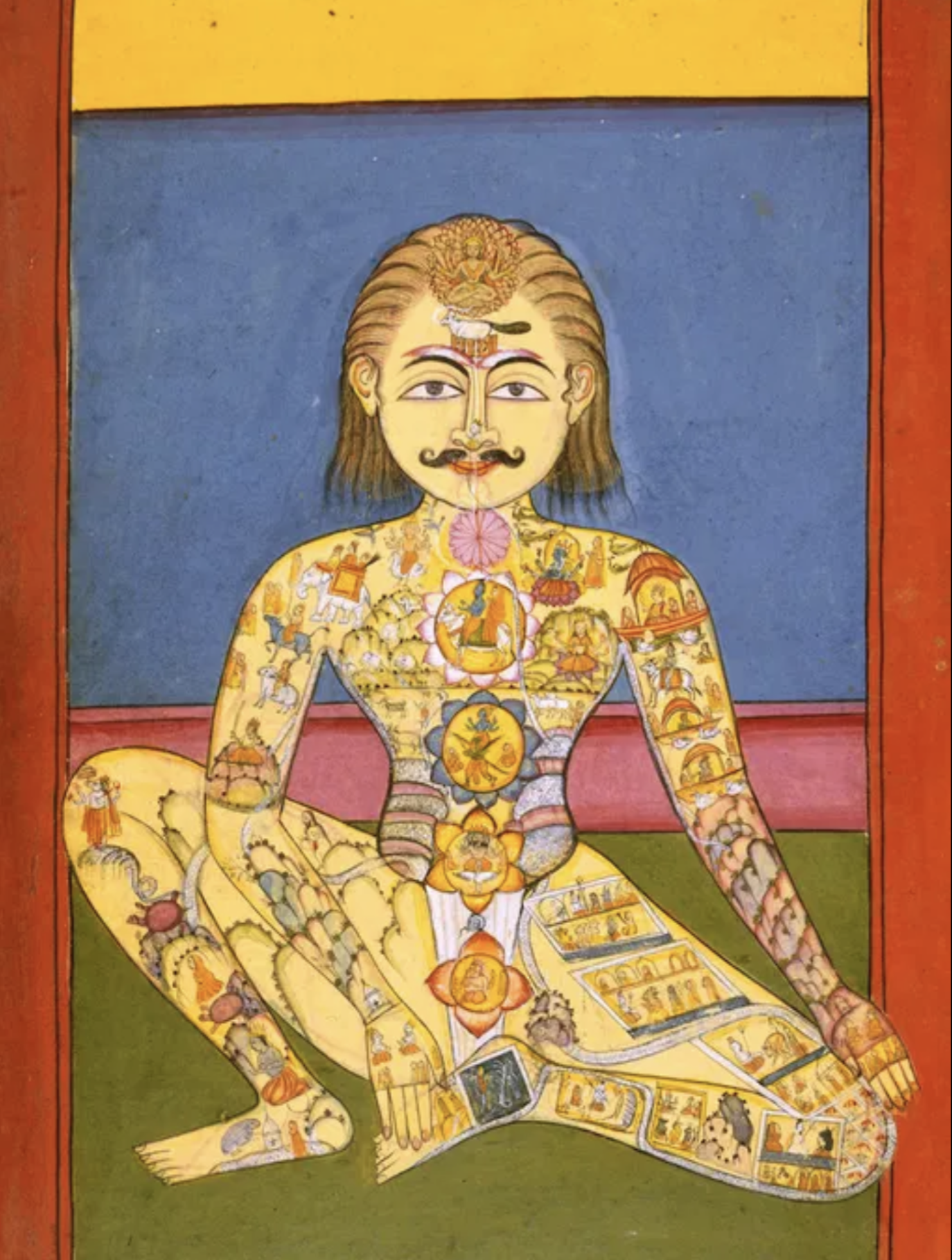
And that brings us to the third layer. The subtle body. In yoga, we call this the nadis, the chakras, the bindus. In the Tibetan system, it’s the winds and the channels. Either way, it’s the same architecture. You are made of energy, and when that energy becomes still, awareness opens. Not the awareness of thought, but a field of awareness that is direct, intuitive, and deeply peaceful.
The Pradipika says it this way: “When prana moves, the mind moves. When prana is still, the mind becomes still. By mastering prana, the yogi masters the mind.”
That’s the whole game. Not spiritual bypassing. Not floaty concepts. Grounded, embodied presence that begins with your body and guides you home to your own subtle clarity.
When you follow this progression, you begin to feel what somatic stillness really means. It’s not disassociation. It’s a full return. Not checking out of life, but checking in fully.
This is why Hatha Yoga matters. Not because it stretches your hamstrings. But because it brings you back into direct contact with the part of you that knows how to heal. And when the nervous system relaxes, the subtle body opens, and the breath moves freely, something shifts.
You stop living from fear. You stop managing your symptoms. You start living from wholeness.
And that is the beginning of freedom.

The Clear Light Mind and the Web of Interdependence: A View from the Gelugpa Tradition
The clear light mind isn’t metaphor. It’s the most subtle level of awareness, untouched by conditioning. When you understand interdependence, you cut through illusion and return to what is real. The Gelugpa tradition gives you the method and the map.
In the Gelug school of Tibetan Buddhism, realization doesn’t happen through belief. It happens through refined analysis and direct meditative absorption. The path is structured, deliberate, and precise. But at its core is something most people miss. The mind’s true nature is radiant clarity, and nothing exists independently—not even your thoughts.
Je Tsongkhapa, founder of the Gelug lineage, wrote:
“All phenomena are empty of inherent existence, yet they function. From this union, freedom arises.”
That’s the union we work with. Clear light and interdependence. The clear light nature of mind is not a metaphor. It is a subtle, luminous awareness untouched by conditioning. It’s there before your name, before your trauma, before even the feeling of I am.
In the Great Treatise on the Stages of the Path to Enlightenment, Tsongkhapa lays out the necessity of understanding dependent origination to reach this direct recognition. He writes:
“Because things arise dependent on causes and conditions, they lack inherent existence. Grasping at their independence is the root of suffering.”
Most modern seekers try to awaken without dismantling the belief in solidity. Solidity of objects, identities, emotions. But in the Gelug view, you cannot access clear light while holding to the illusion of separateness.
What appears to be “you” is a compounded designation. Five aggregates, momentary thoughts, fleeting perceptions—all dependent on causes, labels, and context. The mistake isn’t that the self appears. The mistake is believing that it exists from its own side.
Clear light mind is not something you attain. It’s what remains when the grasping dissolves.
In tantric practice, this becomes even more explicit. At the time of death, as the gross elements dissolve, the winds absorb into the central channel, revealing the most subtle mind—the innate clear light. That same mind can be accessed in this life through completion stage yoga.
But you don’t reach it by bypassing. You reach it through ethics, view, meditation, and stability. You stabilize the winds. You understand the illusion. You rest the mind on its own luminous clarity.
In The Essence of Eloquence, Tsongkhapa says:
“The understanding of emptiness is the king of views. But without dependent origination, it is incomplete. Only when these two are united is the path truly clear.”
This is why my work fuses breathwork and Buddhist view. Without grounding the body and calming the winds, the mind cannot settle. And without dismantling mistaken beliefs in independent existence, clarity will never be stable.
To know the clear light is to stop believing in separation. Not intellectually—but energetically.
The wisdom of the Gelugpa lineage is not dry philosophy. It’s the sharpest sword you can use to cut through illusion. But you must wield it. And you must look directly.
When the self is seen as a dependent phenomenon, not a solid identity, and the mind is rested in its natural luminous state, a new kind of freedom emerges. Not the freedom to escape. The freedom to remain, fully awake.

Awakening Inner Vision: Psychic Development Rooted in Yoga and Buddhist Mind Science
Psychic development isn’t fantasy. It’s discipline. Through breath, ethics, and focused inner training, you begin to see clearly — not just outwardly, but inwardly. This is how the yogic and Buddhist lineages prepared the mind for real vision, not illusion.
The ancient systems of Yoga and Buddhism were not designed for show. They were engineered as technologies of consciousness. What we now call psychic development was never seen as a parlor trick. It was a natural unfolding of mind once prana had been stilled, karma purified, and perception sharpened.
The Hatha Yoga Pradipika states in Chapter 4, verse 1:
“When the breath wanders, the mind is unsteady. But when the breath is still, so is the mind.”
Stillness isn’t about silence. It’s about precision. My work in psychic development doesn’t bypass discipline. It is built on it. When we begin breath training, we are not just inhaling and exhaling. We are mapping pranic currents and unraveling the distortions that block inner seeing.
Most people try to manifest without confronting their core beliefs or karmic loops. It doesn’t work. In the Vajrayana tradition, the mind is described as clarity and knowing. Clarity can be cultivated. Knowing must be purified. Psychic insight emerges when clarity and knowing align through direct practice.
As Gampopa said in the Jewel Ornament of Liberation:
“When the mind is directed inward and rests naturally, its true nature will reveal itself.”
This is the foundation of my Clear Light Intuition training. We begin with breath but quickly move into ethics, vibration, and karmic realignment. You cannot open your inner vision while betraying your own integrity. The psychic field is not neutral. It magnifies what you are.
In Class Two we introduce pratyahara, not as a philosophical idea but as an action. You withdraw from distraction, not to escape the world, but to understand our role in creating our experiences. That’s what the Buddha did. That’s what every lineage holder before you did.
I’ve worked with clients who’ve spent ten years in therapy without shifting the core emotional weight they carry. One month in this system and their language changes. Their nervous system calms. And they begin seeing where energy was leaking.
The Shiva Samhita says:
“When the mind becomes steady in the center of the body, the seer begins to see the inner light clearly.”
And it’s true. When your breath is stable, your mind no longer rushes. When your mind no longer rushes, your attention becomes weaponized. At that point, psychic development is not mystical. It’s practical.
The breath is a key. Your perception is the gate.
The work begins when you’re ready to stop seeking and start seeing.

Breath, Prana, and the Subtle Body: Healing Trauma through Tibetan Buddhism and Hatha Yoga
Trauma doesn’t just live in the mind. It lives in the breath and the subtle body. Through traditional breathwork, yogic alignment, and Buddhist insight, we can release the patterns that keep pain stuck and reconnect to the luminous space beneath it all.
In both Hatha Yoga and Tibetan Buddhism, the breath is far more than the movement of air. It is life itself. It is the intimate thread that connects body, mind, and subtle awareness. When we work with the breath, we are engaging with consciousness directly. And when we learn to guide the breath with clarity and presence, we begin to unlock layers of healing that modern psychology often overlooks.
Trauma isn’t just a story or a memory. It’s a pattern of contraction held in the nervous system and woven into the architecture of the subtle body. The breath shortens. The body tightens. The mind loops through protective narratives. Many healing approaches fail to reach this level. What’s often missing is a direct pathway into the energetic body—the layer where fear, memory, and identity are held and where release becomes truly possible.
The Breath as Gateway
In Vajrayana Buddhism, particularly within the Tibetan tradition, the breath carries wind energy known as lung. This wind is not separate from consciousness. When these winds are unstable, so is the mind. When they become balanced and skillfully directed, the mind naturally settles into spaciousness and clarity.
Hatha Yoga, when practiced in its original form with breath-centered asana and internal energetic engagement, supports the alignment of prana. It refines the pathways of subtle energy—known as nadis—so that old emotional imprints lose their grip on the body.
Slow, conscious breathwork invites the nervous system to stop bracing. It teaches the subtle body that it is safe to soften. This is not spiritual bypassing. It is a return to embodied truth.
The Subtle Body and Trauma
The yogic and tantric traditions describe the subtle body as composed of three key elements:
• Nadis: the channels through which prana flows
• Chakras: the centers where energy, memory, and identity converge
• Bindu: subtle points of potential, vision, and stillness
When trauma disrupts this system, flow is interrupted. The breath becomes erratic. Awareness fragments. Healing, in these traditions, begins not by dissecting the story, but by restoring energetic coherence.
How Practice Restores Flow
Through the integration of posture, breath, and inquiry, we begin to reset the system. The method I teach—Hatha Vajra Yoga—is designed to restore rhythm to the inner winds and guide the practitioner into direct contact with the mind’s natural luminosity.
Many students experience spontaneous emotional release, deep calm, or even visions during practice. This isn’t because something new has been added. It’s because something constrictive has been let go of. When the internal winds move with grace, the mind follows.
A Path Toward Wholeness
There is no fast track to authentic healing. But there is a direct one. It doesn’t require reliving every wound. It invites us into a different relationship with experience. In Tibetan Buddhism, this is the path of direct perception. In Yoga, it’s the practice of pratyahara and meditation. I see it as a return to our original rhythm.
If you are navigating emotional patterns that feel ancient or lodged deep in the body, begin with the breath. Let it be your guide, not your tool. When the breath settles, the winds settle. When the winds settle, the mind reveals its natural radiance.
Healing, from that space, isn’t something we force. It becomes something that simply happens.